
Service
Tile Floors, Mud-Set and Heated
Porcelain, stone and large-format floors, old-school mud beds, and electric or hydronic radiant heat.
A tile floor is only as good as what's under it. Large-format porcelain and plank need a floor flat to within 1/8" over 10 feet, full mortar coverage and a leveling system, or you get lippage, hollow spots and cracked tile. We get the floor right first, whether that's Schluter DITRA over a sound subfloor or the old-school way.
The old-school way is a mud bed. Packed sand-and-cement mortar, floated dead flat and dead level by hand. That's how the 80-year-old hex floors in Long Island's pre-war homes were built, and it's why they're still there. Very few installers still do it. We do. It fixes out-of-level floors and uneven joists, and it's the best base there is for radiant heat.
We install both kinds of radiant heat. Hydronic runs warm water through PEX tubing. We lay it out, encapsulate it right in the mud bed and make the hookup ourselves, so the heat, the mud and the tile are all on us. That's the way to go on big floors, additions and new construction. For a single bathroom, kitchen or mudroom, electric heating cable in Schluter DITRA-HEAT does the job with barely any added height.
What’s included
- Porcelain, ceramic, marble and stone floors
- Large-format and wood-look plank with leveling systems
- Floated mortar-bed floors, leveled by hand
- Hydronic radiant: PEX in the mud bed, hooked up to your boiler by us
- Electric radiant in Schluter DITRA-HEAT
- Schluter DITRA uncoupling, trim and transitions
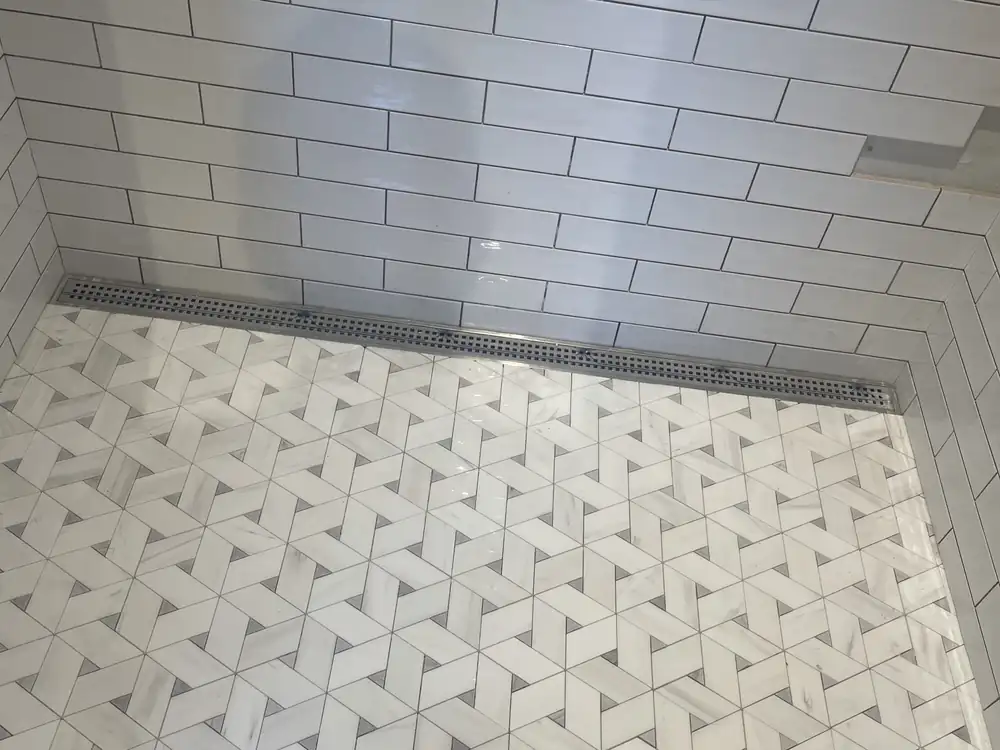
- Period-correct hex, basketweave and mosaic floors
- Kitchens, baths, entries, mudrooms and whole floors
One bathroom, start to finish
How a shower goes together
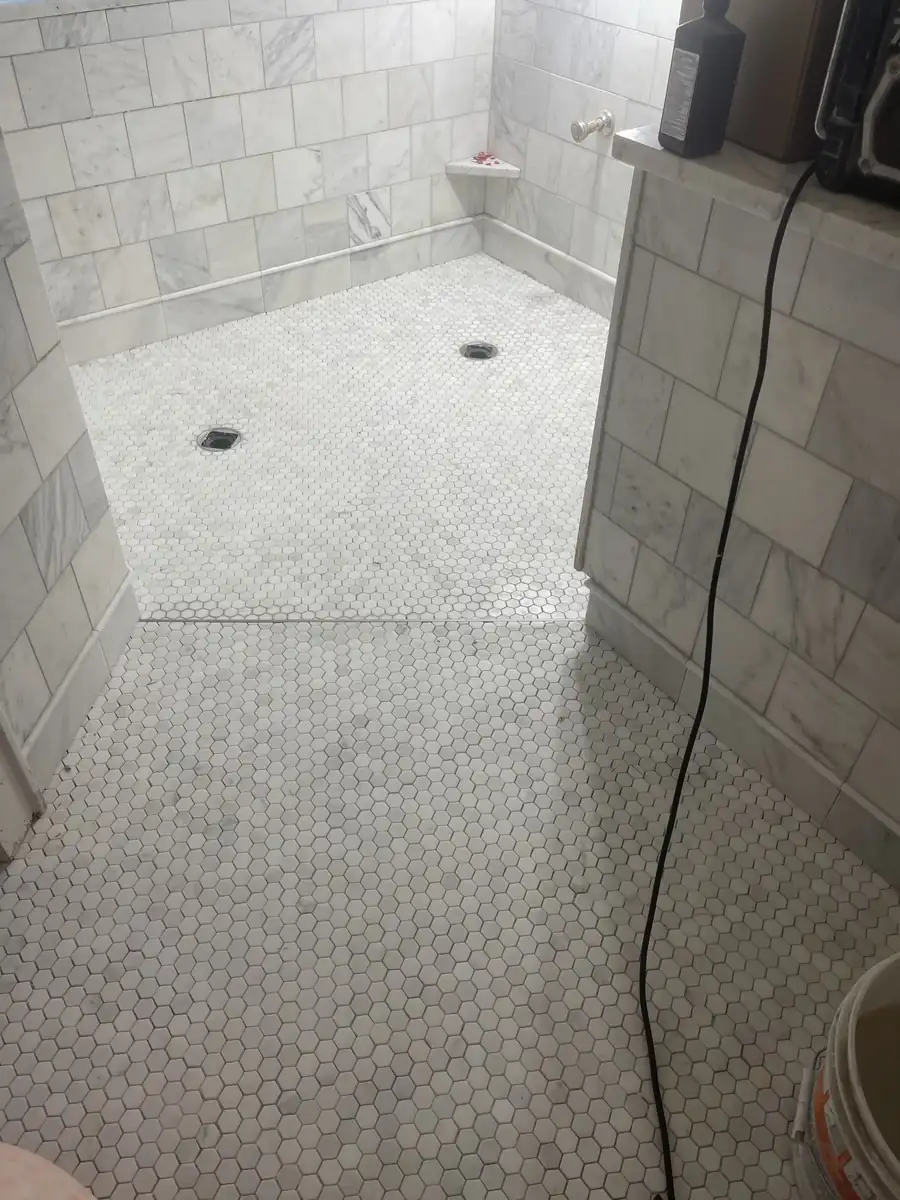
Same job, in order. The old pan came out, the mud bed went in over the radiant tubing, KERDI went over the mud, and the marble went on last. These are Lou's photos from that bathroom.
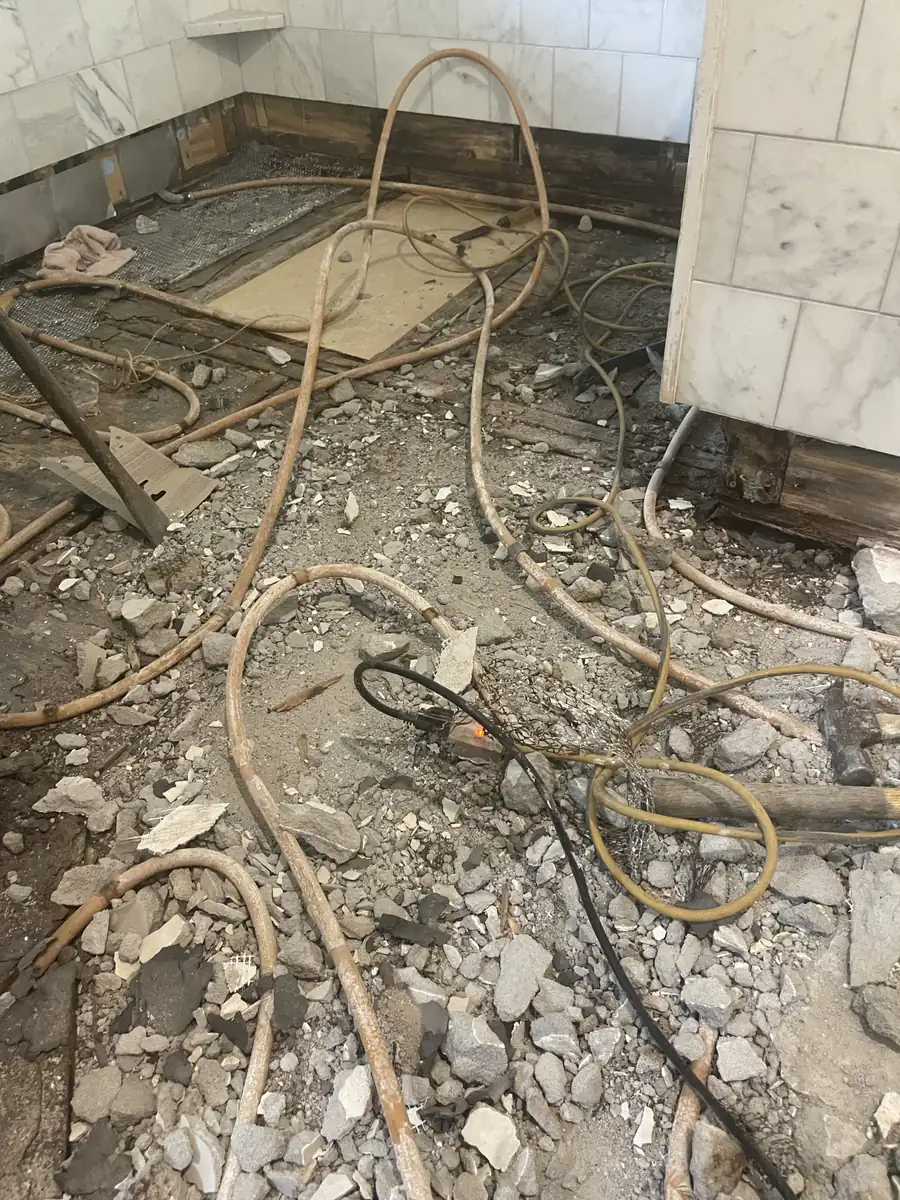 01
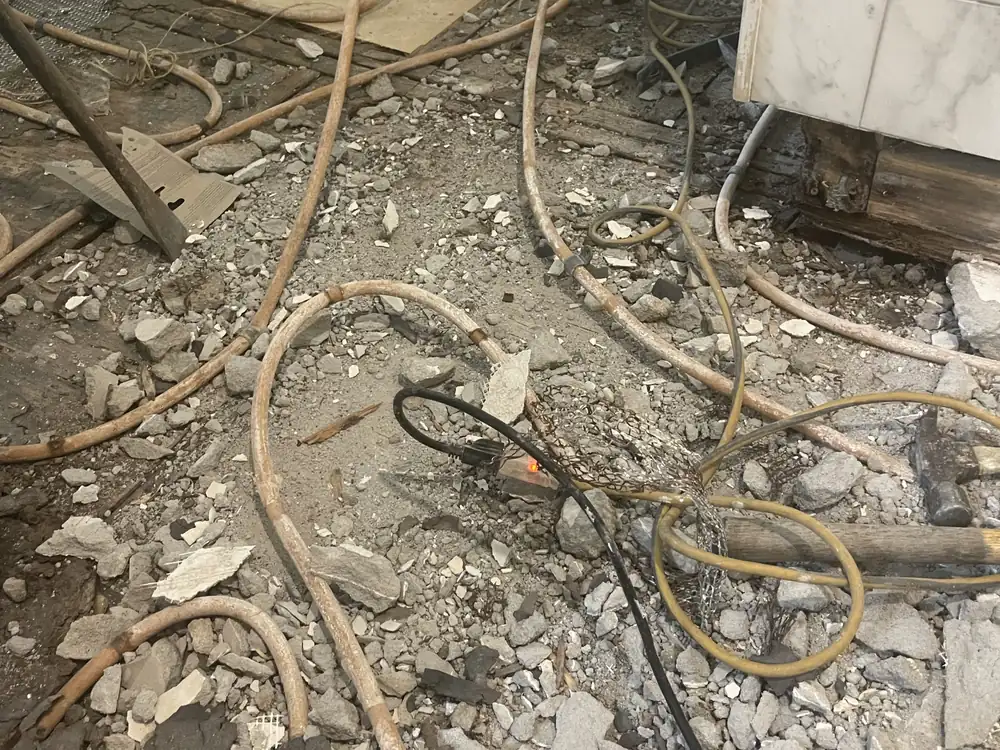
01Tear it out
The old pan comes out down to the joists. Whatever failed gets found and fixed before anything new goes in.
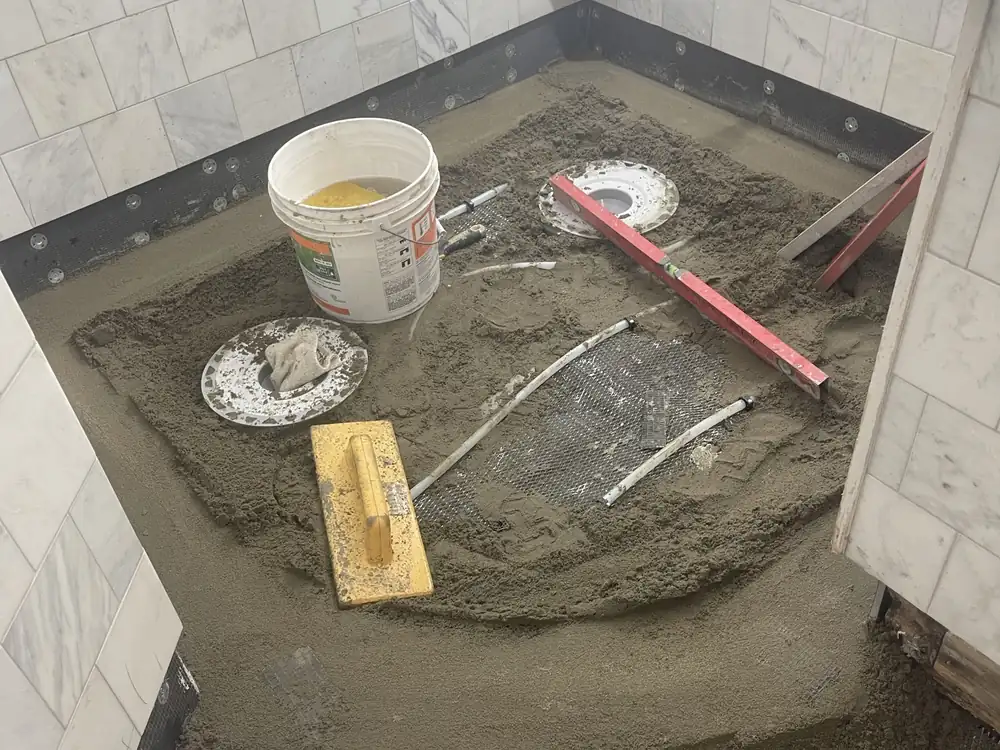
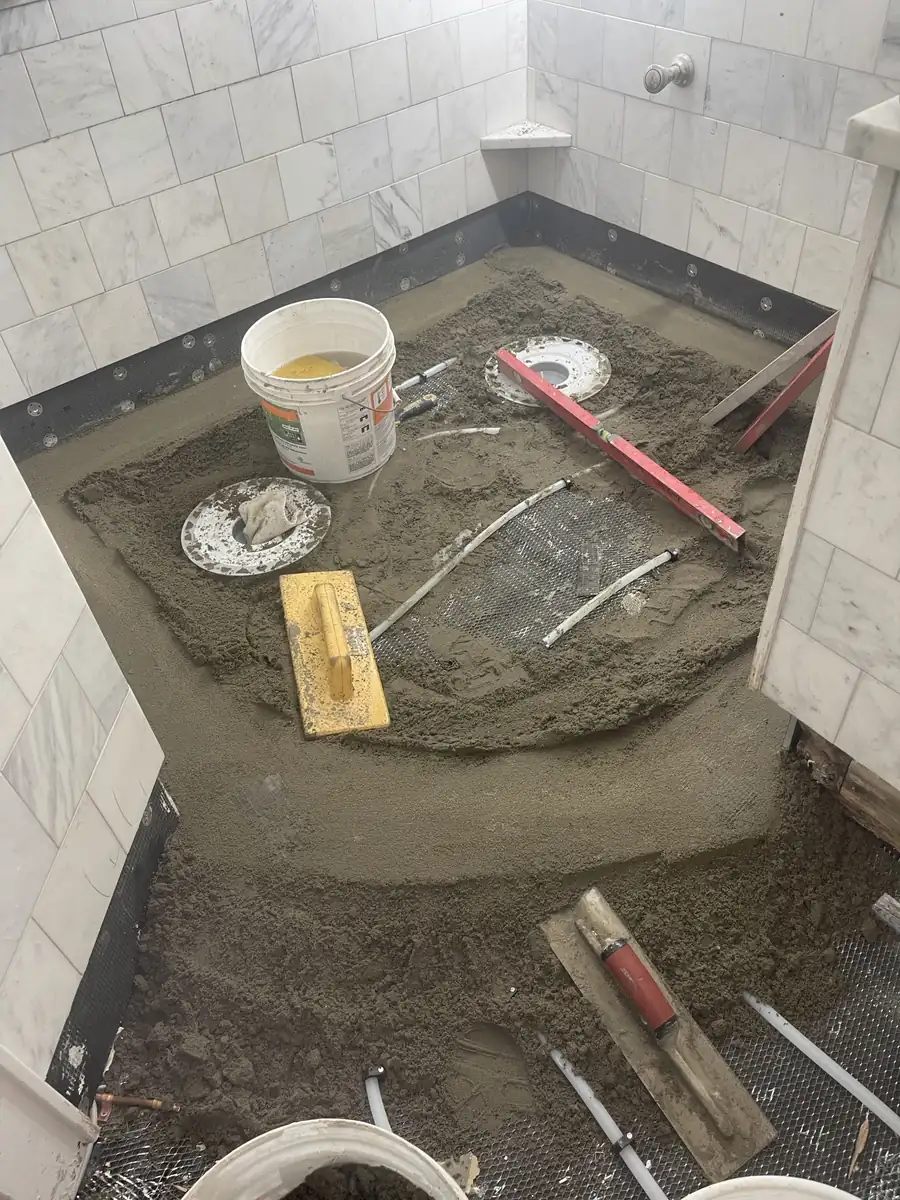 02
02Float the mud bed
Packed mortar over wire lath, floated flat and sloped by hand, with the radiant tubing encapsulated in it.
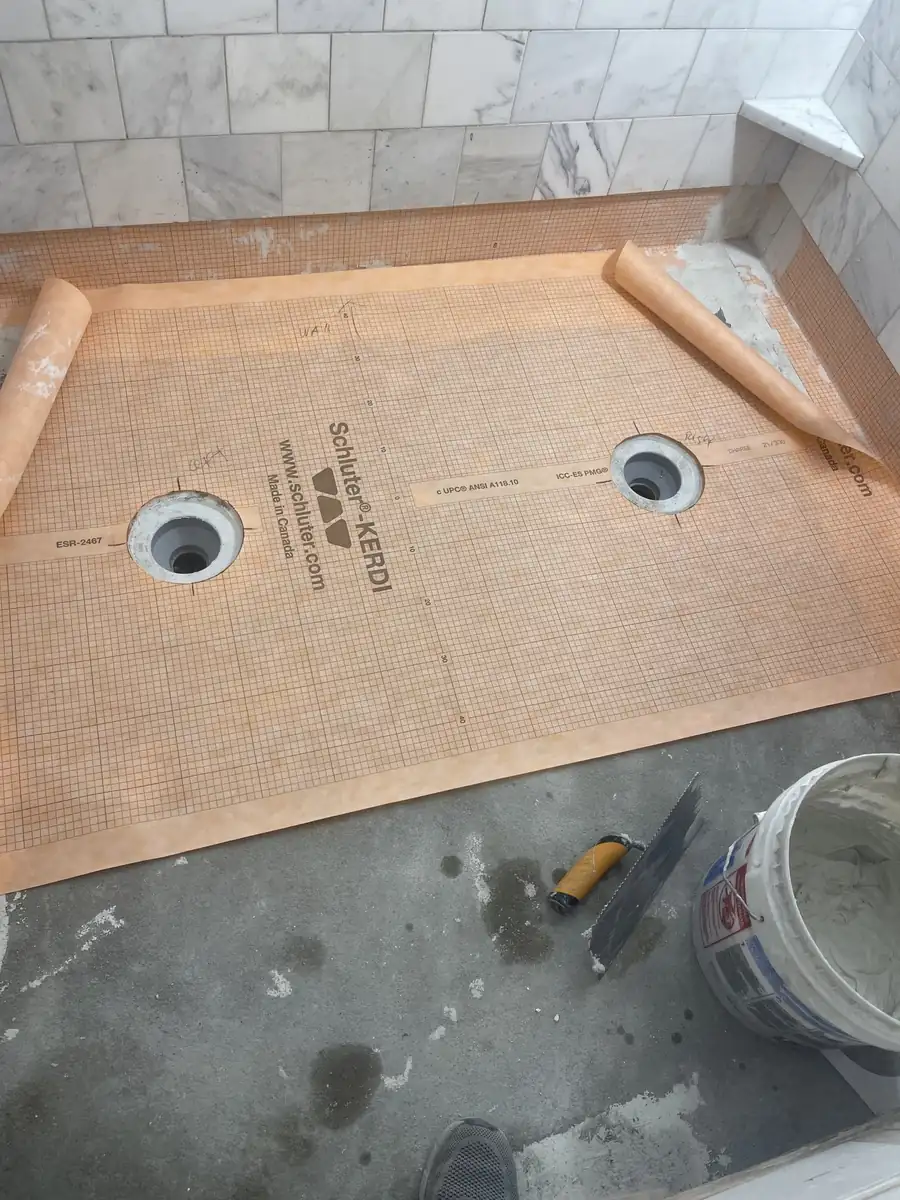 03
03Bond the waterproofing
Schluter KERDI bonded to the mud bed, drains tied in, corners and seams sealed, then flood tested.
 04
04Set the tile
Marble walls and a hex mosaic floor, set on a base that's dead flat, fully supported and completely waterproof.
Questions
Tile Floors FAQ
- Is a mud floor better than backer board?
- Depends on the floor. Backer board is faster and fine on a flat, solid subfloor. A mud bed is what you want when the floor is out of level, when you're matching an old floor height, when radiant tubing is going in, or when you just want the most solid base there is.
- Electric or hydronic heat: which one do I need?
- For one room, electric is simpler and cheaper to put in. Hydronic makes more sense over a big area, a whole level, or in a house that already has a boiler: it costs less to run and the heat is more even. Lou will say which way he'd go once he sees the space.
- Is a heated floor expensive to run?
- Radiant floors are about warm tile, not heating the whole house. Electric on a programmable thermostat set for mornings and evenings costs little to run, and over a big area hydronic is usually cheaper still.
- How much height does a mud floor add?
- A floated bed is typically 3/4" to 1-1/4" plus the tile, more with hydronic tubing in it. Electric heat adds very little. Either way, we plan thresholds and door clearances before we start.
- Can you tile over my existing floor?
- Sometimes over sound existing tile or a properly prepped subfloor. Never over floating floors or anything loose. We'll check on the site visit and tell you what has to come up.
Still have a question?
Call and ask. Or text a photo and Lou will tell you what he's looking at, what it takes, and roughly what it costs.
Where we work
Tile Floors across Suffolk County
Free estimates